“One of the things that molecular studies have reinforced is something that had already been accepted by modern geneticists: the popular conception of the gene as a simple causal agent is not valid. The idea that there is a gene for adventurousness, heart disease, obesity, religiosity, homosexuality, shyness, stupidity, or any other aspect of mind or body has no place on the platform of genetic discourse.”
– Eva Jablonka and Marion J. Lamb, Evolution in Four Dimensions.
One of the most important books about the revolution in biological philosophy that’s underway is Evolution in Four Dimensions by Eva Jablonka and Marion J. Lamb, (2014, MIT Press, Cambridge, MA).
A quick summary might say: Evolution isn’t reducible to the dynamic interplay between genetic mutations and natural selection, as we once thought. Evolution occurs simultaneously on the genetic, cellular, and organismic levels as the epigenetic bioengineering operating system of the cell manipulates genetic information to respond to environmental threats and opportunities.
Which is to say that evolution turns out to be much more complicated and open-ended than 20th century science had anticipated, and the scale of the complexity is the real story we need to get to.
But let’s first continue with Jablonka and Lamb’s book: It is brilliant and brilliantly provocative. To paraphrase anthropologist Aaron Blackwell at the University of California, what Jablonka and Lamb are saying is that there are four interactive inheritance systems operating synchronously. Evolution isn’t “produced” by any one system; it’s driven by the harmony of all four.

Glowworms (bioluminescent arachnocampa luminosa) in the Waitomo Glowworm Cave, Waikato, New Zealand. The worms are actually the larval phase of the fungus gnat. Their bioluminescence attracts insects they prey on. The worms synchronize their glow to maximize their overall effectiveness for luring prey. Their evolution is considered an example of highly specific adaptation to microclimate conditions. (Tomas Bazant, Shutterstock)
What they’re also saying, and this is my own take, is that the traditional framework of 20th century biology – the neo-Darwinian model of inheritance and evolution – no longer works. Evolution can’t be reduced to mathematical principles. Life is a multilevel phenomenon; a process with its own internal rules and direction that’s orders of magnitude more complex than the physical universe it emerged from, and not about to fit into any materialist grand unifying theory of everything.
Jablonka and Lamb wrote for a non-specialist audience, but I think the book’s technical level would still be rough going for those with little familiarity of basic general biology, which is probably about 99% of the global adult population.
Think how ironic that is, by the way. A scientifically significant book that explores our new understanding of the most fundamental way that life evolves over time will never be read or known about by most of the people on the planet. But I can’t blame the authors. It’s hugely challenging to make molecular biology reader-friendly without losing the significance of what you’re saying.
I’m not a molecular biologist but I have enough experience with biological research to realize that what Jablonka and Lamb are saying is profoundly significant. Calling it a paradigm shift doesn’t come close. Sure, there are lots of exciting things going on all the time in “science.” Artificial intelligence, big bangs, Higgs bosons, black holes … whiz-bang technical stuff that’s superficially much sexier than some boring, esoteric complexity from the frontiers of biology.
But from a philosophical perspective, the new foundational paradigm for 21st century biology is way more important than any of that. The old theoretical framework of genetics and evolution that biology students have had drilled into their heads for the last 80 years has been thrown into chaos over the last two decades, in a good way-but also a disorienting way.
Shall I wax metaphorical? “Biology” just had the theoretical rug it had been standing on for the last 80 years pulled out from under it, and is currently floating in the air.
Moreover, an ancient idea that was discredited long ago called Lamarckism , which says environmental pressures can cause species to gradually acquire new traits, and those traits can be passed along to progeny, has now been proven to be true. The cell’s inheritance system uses the genome as it needs to in order to respond to enivornmental information. The cell, not the gene, is the master engineer of evolution.
The old neo-Darwinian theory packed a cynical philosophical punch because it said that the evolution of the species, including humans, occured through random genetic mutations. And if there was no inherent purpose or direction on the biological level, then there was nothing particularly significant about human existence.
But now we know that randomness plays only a minor role in the overall drama. Yes, humans evolved from nature but, no, it was not just some random, meaningless event. All living systems are teleologic – they possess organismic purpose, goal-directedness and agency. Some scientists characterize this as kind of “cognitive” ability at the cellular level. An analogy for the new understanding between the genome and the cell might see the genome as a music playist of top100 songs and the cell as a videographer who takes music clips from the playlist to create her art. Sometimes she edits the music clips to add or subract something – a voice, a drum, a symphony. Sometimes she splices them together with her own clips. The cell is the artist; the genome is just a tool, a piece of molecular information.

Trumpet cup lichen (Cladonia fimbriata). Lichen are actually symbiotic organisms from different biological kingdoms (fungi and bacteria) that integrated their complimentary traits and co-evolved.
(Tintila Corina, Shutterstock)
But what is the artist trying to create? In 2021, The Linnean Society of London, held an international meeting titled: Evolution ‘On Purpose’: Teleonomy in Living Systems. It included 15 of the world’s leading evolutionary biologists, molecular biologists, and biological theorists, and they generally agreed that one of the foundational challenges for 21st century biology will be to figure out what it means to say that cells have a kind of self-cognition and directed agency.
If nothing more, the emerging view of evolution is that it is many times more nuanced and complex than our previous understanding. It also appears to be saying that evolution is a self-regulated and goal-directed process. It blends cooperation and competition at all levels of biological organization to achieve its goals. Complimentary integration in equal measure with “survival of the fittest.”
What are its goals?
On a technical level, one of evolution’s goals seems to be greater complexity to achieve greater flexibility and capacity for adaptiveness. It would have been anathema to say this less than four decades ago. As an undergraduate and graduate biology student I was told, along with tens of thousands of other students, that evolution has no goals; its apparent progress is an illusion; its changes are random and meaningless. Don’t be deceived by the seeming trend towards increasing complexity of vertebrate anatomy and higher levels of consciousness over time, for example. Don’t be fooled by the trend towards greater intelligence and self-awareness in primates. There’s no inherent directiveness. There are plenty of examples of things going backwards if you look for them. Organisms are only as complex as they need to be to thrive in their environments. And by the way, “complexity” is a human bias. Keep that in mind.
But now we know, for example, that the increasing anatomical, neurological, and physiological complexity in the subphylum of vertebrates over evolutionary time, starting with ancient jawless agnatha (like modern lampreys) and progressing to mammals and birds was driven by the inherent teleology of biological systems at all levels.
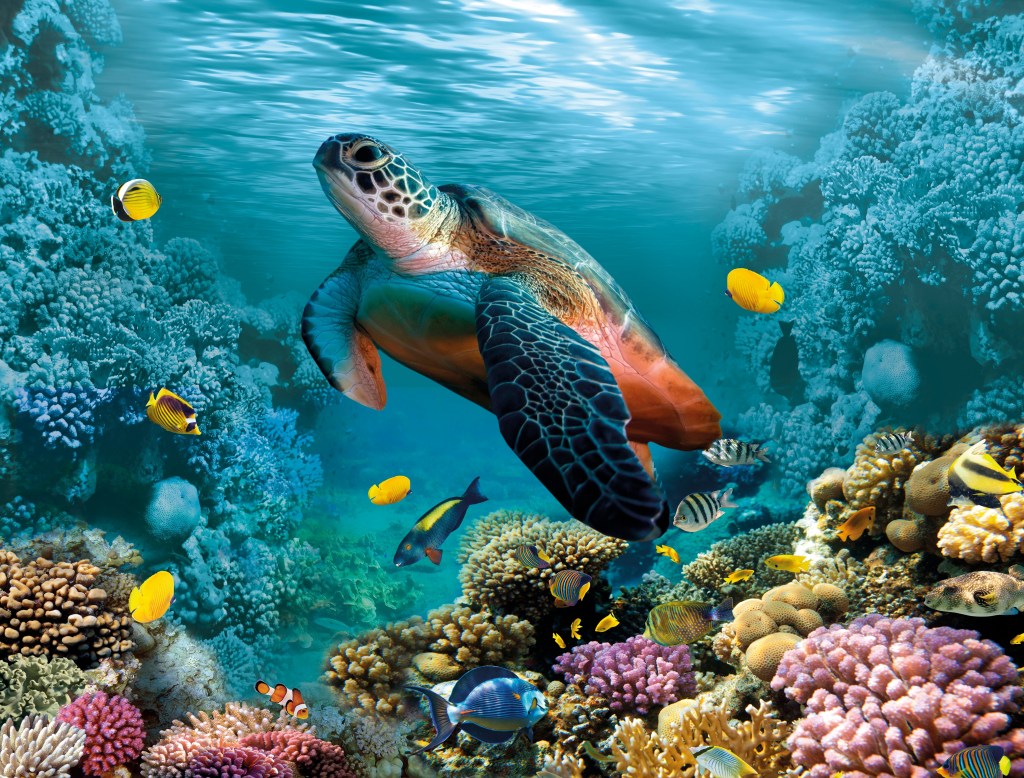
Sea turtle and coral reef in the Red Sea, Egypt.
(Ekaterina Kuzmenkova, Shutterstock)
Traditional science presumes that all phenomenon can be explained by underlying forces – mechanical and gravitational, covalent and ionic, electromagnetic, quantum, etc. But now we’re realizing that life operates beyond such frameworks, arising from endless, intimately interconnected biochemical cycles and regulatory feedback loops, the totality of which is much more complex than any physical phenomenon, and infinitely more sophisticated than any man-made entity.
In future posts I’m going to try to expand on what I’ve learned about cell cognition and agency in the way that the new paradigm is saying what those things technically mean. In the literature, you can sense a tremendous hesitation and uneasiness around the subject at the specialist level: Acknowledging that an entity that was once considered a mindless chemical clockwork – the cell – might actually possess a kind of biochemical self-awareness is an unsettling concept for most scientists. But why? We have no problem ascribing “cognitive” and “sentient” abilities to AI machines which, despite their technical wizardry, are log orders less sophisticated than even the simplest unicellular organism. So why not?
Intelligent Design, Women, Vincent van Gogh, and the Bhagavat Gita
In the 20th century there was a general consensus among biologists that the basic rules of inheritance and evolution had been worked out. But you’d be hard pressed to find a 21st century biologist working at the molecular or cellular level who would admit the same thing.
Yet publicly, many scientists are hesitant to let go of the old neo-Darwinian model because they grasp the philosophical implications of doing so. Saying that evolution has “goals,” and individual cells are “cognitive” about their internal and external conditions (Shapiro, Biochem Biophys Res Comm. 2021, Jul 30:564,134-149) conjures the presence of forces arising from the complexity that are beyond our capacity to observe and integrate into a predictable system. The public might misinterpret this! Intelligent design and creationism theorists are lurking outside the window. Lions and tigers and bears, Oh My! As one distinguished neuroscientist put it, the new paradigm “allows God back into the conversation.” (Denis Noble, Dance to the Tune of Life, 2017, Cambridge University Press, p. 248).
They need to chill out. God doesn’t care, nor do most of the public.
It’s interesting that the leading voices at the forefront of molecular genetics seem compelled to assert their atheism. I sense a great uneasiness that the decline and fall of the old neo-Darwinian model opens the door for new arguments about creationism and intelligent design. It’s interesting that this bothers them so much.
I’m familiar with some of the creationist and intelligent design arguments, and I don’t see much merit to them, but they don’t bother me. I don’t understand the insistence on scientific-atheistic purity. There are much worse things than intelligent design theory being broadcast out there.
At this moment in history I think biologists in every specialty need to accept that the whole selfish-gene/neo-Darwinian framework we all bought in to for so many years was wrong. We thought that molecular geneticists would preserve and reinforce the model, but the opposite happened and we all need to suck it up and admit that the complexity of the biological cosmos we all love, at least for now but perhaps forever, is beyond our collective comprehension. Why is that so disturbing?
It doesn’t mean we stop trying, but sometimes it’s helpful and reinvigorating to step back and appreciate the numinous splendor of the living universe. If some people want to ascribe spiritual or even supernatural significance to it, where’s the harm? Why the anal-compulsive fixation on mechanistic atheism? Where’s the joy?
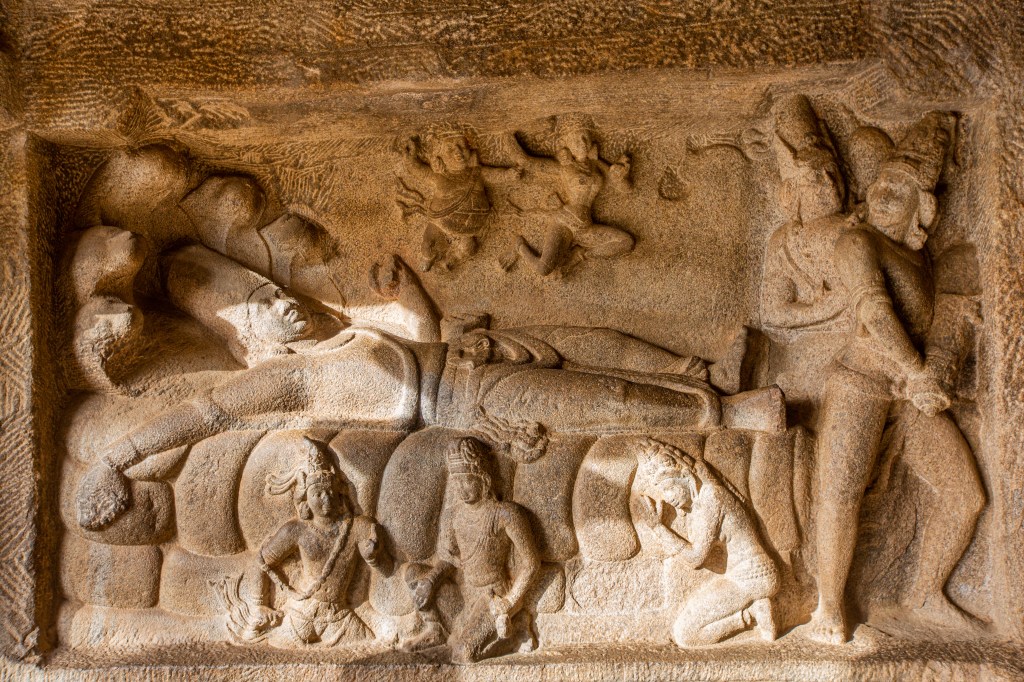
Intelligent Design?Vishnu Dreams the World. “… the Supreme reposes upon his mighty serpent couch amidst the deep … in this manner the mighty Visnu, whose essence is the elements, abides in all bodies, and brings about production, existence, and dissolution.” Seventh century A.D. cave temple of Mahisha Mardini Mandapa in Mahabalipuram, India. (xTOLIndia.com, Shutterstock)
The other big implication of the new paradigm is something that scientists really don’t like to talk about: How profoundly complex biology is, and that we may well be on the cusp of an entirely new philosophical era in which we’re forced to accept that because its complexity at the molecular level is far beyond our current capacity to comprehend it, then much of what we know – or what we think we know – about higher levels of biological systems is overly simplistic. For example, the new paradigm’s revelation of a kind of biochemical “consciousness” at the cellular level introduces fascinating hypothetical questions about the progressive sophistication of vertebrate consciousness over evolutionary time.
In one of his final letters to his brother, Vincent van Gogh speculated on where science might be taking us. He wondered if it would ultimately arrive at a kind of consilience with the spiritual yearning within us.
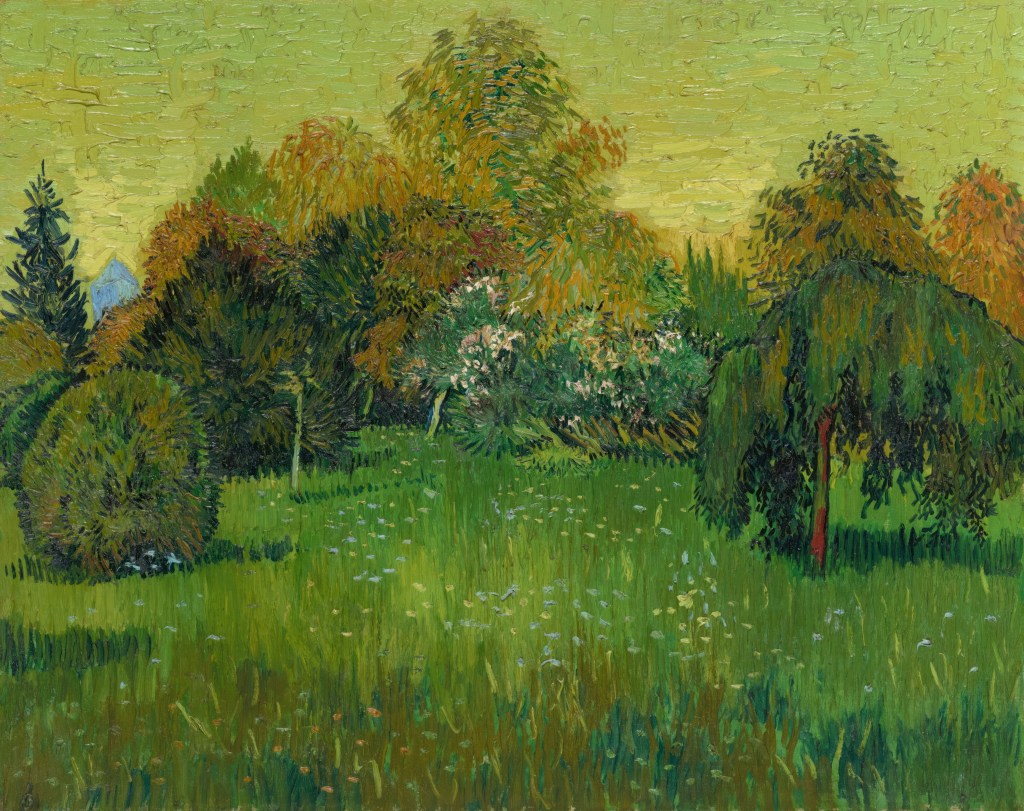
The Poet’s Garden by Vincent van Gogh. (Courtesy of The Art Institute of Chicago, Unsplash.)
Van Gogh had tried and failed to become a Protestant minister, but he remained deeply Christian throughout his life, and you have to wonder how this influenced his work. Nature spoke to him, and he painted it as sublimely gentle and beautiful, but also terrifyingly mysterious. Did he see it as God’s dream? Is it a betrayal of my scientific devotion to suggest that the intricacy of the biochemistry of a neuronal synapse gives me a sense that I’m seeing the infinite genius of a mind far beyond mine?
Another fascinating aside about the emergence of the new paradigm over the old is how much of it was formulated and anticipated by women. Certainly, we’d start with chemist Rosalind Franklin, one of the lead scientists (some would say the lead scientist) in the discovery of DNA; and then evolutionary biologist Lynn Margulis at the later end of the 20th century, with her profound observations about symbiosis.
But the woman who saw it all coming and, by the way, who played a key role in bringing it forth was geneticist Barbara McClintock, who prophetically predicted back in 1984 that cells have a kind of self-awareness of their biochemical capacities and environmental threats. (Shapiro, Evolution, A View From the 21st Century, 2022, Cognition Press, p.112-114.) Keep in mind that McClintock was a Nobel Laureate biologist, not a new age shaman.
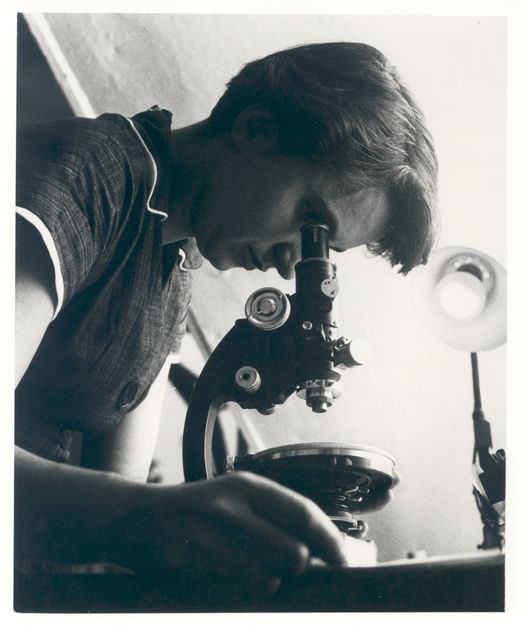
Rosalind Franklin
(https://commons.wikimedia.org/wiki/File:Rosalind_Franklin.jpg)
McClintock had predicted that in the future we’ll grow to understand that cells are purposefully directed. The implication was that each organization level above the cell, up to the level of the global biosphere, is similarly directed. This idea ties in nicely with Lynn Margulis’ Gaia hypothesis that all living bodies from the micro to the macro levels are integrated into a self-regulating global physiological system. (Lynn Margulis, Symbiotic Planet, 1998, Basic Books/Perseus, p.98-106)
Margulis bemoaned the “Anglo-Saxon” predilection among the predominantly male community of professional biologists to insert competition and struggle into the evolutionary framework. I think she was definitely on to something. She was firmly atheist and made this very clear in her writing. McClintock … I’m not so sure. From her writing, I sensed greater intellectual openness. Margulis seemed almost angrily convinced of her atheism.
I grew up Catholic, so it’s always seemed plausible to me that religion and science can accommodate each other within the same mind. Science is rational and fascinating, but it also tends to choke the joy out of everything. Religion is intuitive and fulfilling, but it doesn’t explain how nature actually works. It’s like a van Gogh painting: To appreciate his genius you need to get up close enough to see the brushstrokes, but you can’t really know what he was trying to say until you step back and take it all in.
Buddhist scholar Francisca Cho phrased it very insightfully in Religion and Science in the Mirror of Buddhism (2016, Routledge/Taylor & Francis, p.7): neither science nor religion – nor any human intellectual framework – can exclusively claim some “ultimate truth” about the universe. (p. 18, 72) This is a hard pill for many scientists to swallow. I’m planning to review her book at some point because I’m also intrigued by Cho’s Buddhist concept of “narrative pluralism” (p.9).
Briefly put, narrative pluralism starts with the premise that the human mind can’t possibly comprehend the totality of the universe. Yet, the human mind can’t avoid the urge to frame reality into some kind of coherent narrative. So how do we judge the value of our narratives?
In Hindu iconography you might sometimes come upon a scene from the Bhagavat Gita depicting a tall, blue-skinned god holding the reigns of a chariot with a princely-looking human standing behind him. They are Lord Krishna and warrior prince Arjuna.

Prince Arjuna and Lord Krishna
(Thanks to Oleg Churakov, Unsplash)
As the Gita opens, Arjuna is readying his army to join battle against the army of an opposing royal family. Many will die and their souls will reenter the infinite cycle of suffering, death, and rebirth. Arjuna confides to his charioteer Krishna, the earthly avatar of supreme god Vishnu, the inner turmoil he feels about the grief he’s about to bring into the world. Krishna engages him in a discussion about the cosmic order of things: Suffering and death are part of the cycle of existence; knowing one’s duty to God is important. When Arjuna continues to despair, Krishna transforms into his true divinity of Vishnu, a terrifying, awe-inspiring being with infinite faces turned to infinite worlds. The creator of the cosmos. This is known as the Vishvarupa. God momentarily brings Arjuna’s mind into his own infinite cosmic mind, where Arjuna experiences multidimensional reality in all its luminosity – the universe as God sees it. Arjuna is overwhelmed and begs Vishnu to please transform back into the familiar earthly form of his spiritual mentor and charioteer Lord Krishna.
Arjuna now grasps his duty within the cosmic order, but he also realizes that the true nature of the universe is beyond the comprehension of his earthly mind, contained as it is in within God’s eternal dream.


Thank you for your response. ✨