Too few people feel a spiritual connection with nature. Climate change has become just another bad thing that’s happening in the politicized human world …
If you’re a radical lunatic environmentalist like me, then you may have noticed that our side is getting clobbered in the political battle over climate change.
There’s no more illustrative example of this than the president of the United States announcing to the United Nations general assembly that climate change is the “greatest con job ever perpetrated on the world.” And unfortunately, at least on this issue, he’s a man of his word. Within six months of being returned to office by millions of supposedly environmentally-conscious Americans, Trump had dismantled decades of climate regulations, and aggressively exorcised climate research from government agencies and programs. NASA, NOAH, the NSF, and the EPA must now genuflect to the MAGA-dogma that climate change is a hoax.
Think of the effort that went into all that policy work and legislation. The money spent; the hours of meeting time. Gone baby gone.
Huge majorities of Americans in both parties say they care about the environment and support climate initiatives.
And yet … here we are.
It’s hard to unknot all the pretzel-logic reasoning behind this political debacle, but I’d like to suggest an underlying thread that most science-minded people don’t want to hear: People intuitively love nature, but they’re detached from it. Nature is like an art museum for most people. They’re intuitively moved by its beauty; but they’re sealed off from it.
The world was alive and personal in the ancient mind … material reality was symbolic of an unseen and sacred dimension of existence.
An interesting thing about this is that our distant ancestors felt very spiritually connected to nature. The world was alive and personal in the ancient mind. In the words of religious writer Karen Armstrong, material reality was symbolic of an unseen and sacred dimension of existence. (p.27 the case for God.) Nature was magic and wonder; homo sapiens was homo religiosus.
How our spiritual connection with the environment went from sacred to profane is pretty much the long story of human civilization. Enlightenment philosophers demystified and sanitized physical reality to something that could be rationally deconstructed. The expanding God-shaped hole in nature was the grounding theme of the “romantic” movement in literature and art, from Thoreau to Dickinson to Melville. Art reflects the spiritual longings of its times.
Just as the romantic era was ending, a grand opportunity for reconciliation arose when Darwin published his enlightened realization that the entire natural world was in a continuous state of evolutionary change and that humans themselves had emerged from this sublime phenomenon. Looking back on it now, I think it’s tragic that human evolution wasn’t presented in a more “romantic” and metaphorical frame. For example, that for one shimmering moment the endless river of life brought forth a species with cognitive prowess and self-awareness unlike any other. That’s us. And, yes, certainly, we’re made in God’s image too. Why not?
Instead, it was espoused as yet another science theory in a time when the foundation of modern science was being laid. Yes, it was profoundly controversial and unsettling, but, ultimately, still a thing of science, a theory to be debated and, perhaps exploited for some political or technological purpose. (Which happened relatively soon. The ‘political theology’ of Carl Schmitt, the Nazi theorist who greatly influenced Adolf Hitler, was based upon a gross distortion of Darwinian theory.)
It’s impossible to know but interesting to think about how global events might have unfolded over the last two centuries if evolution had been framed in a way that gained it wider acceptance from early on. Instead, as we know, Darwin’s evolutionary revelation provoked a kind of immune response in American religious-political culture. And it’s been safely cordoned off as a kind of unpleasant curiosity ever since. Even for those non-scientists who accept evolution’s claims, it’s not something that has much meaning in their personal, spiritual lives. It’s still a scientific theory, and not a revelation.
Scientists, from the get-go, made little effort to prevent evolution becoming a kind of final nail in the coffin of the Judeo-Christian perception of humanity as the center of creation.
But religion doesn’t take all the blame here. Scientists, from the get-go, made little effort to prevent evolution becoming a kind of final nail in the coffin of the Judeo-Christian perception of humanity as the center of creation. Yes, now we can explain how it all came to be – fish, plants, dinosaurs, viruses, bacteria. Humanity? Yes, that too, although there’s nothing particularly special about humanity.
Many scientists grasped the inherent nihilism of this approach, and what it portended for wider acceptance of evolutionary theory but … so be it. Science had now established itself as above the fray of human self-deception. Science was righteous; religion, which gives meaning to human existence, was no better than superstition.
Even in contemporary times, biologists tend towards this triumphalist view of science over religion in their approach to popularizing evolution in the non-professional media.
Here’s a case in point.
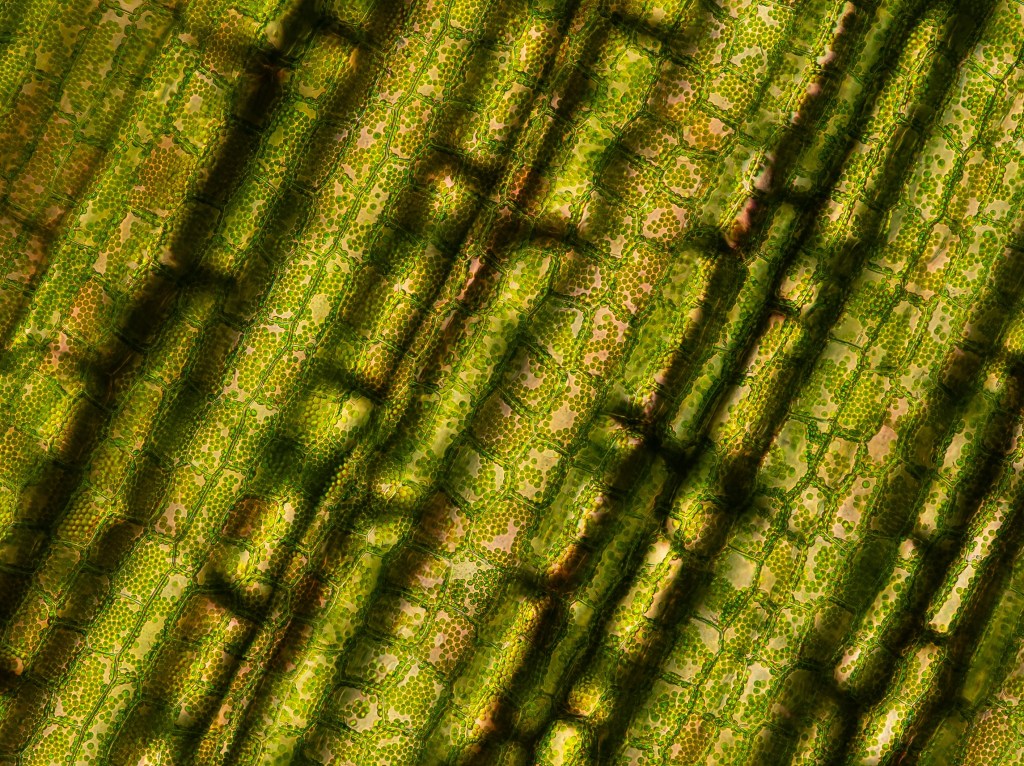
The late, great Lynn Margulis was one of the world’s most underappreciated and brilliant evolutionary biologists. It was she who theorized, back in the 1960s, that mitochondrion and chloroplasts were once independent, bacteria-like organisms that had been symbiotically absorbed into other primordial eukaryotic cells. More important, she argued that the whole neo-Darwinian ‘survival of the fittest’ concept of evolution was tainted with “Anglo-Saxon” chauvinism, and that symbiosis, integrative and adaptive coalescence among species, was infinitely more important than competition as the driving force behind evolutionary change.
For non-biologists I’ll just say that in terms of ruffling the feathers of the prevailing intellectual establishment this was not unlike Nicholas Copernicus’ wacky idea that the earth orbits the sun and not vice versa.
Margulis was scoffed at and dismissed by the mid-century (male-dominated) scientific illuminati until
the 1980s when the emerging technology of molecular biology proved her claims about mitochondrion and chloroplasts to be absolutely correct. The bogus ‘survival of the fittest’ view of evolution she scorned has been a tougher dogmatic nut to crack mainly, I suspect, because it’s so firmly rooted in popular culture, particularly in the self-aggrandizing capitalist technocracy.
In the coming decades I believe Margulis’ most important contribution may prove to be her collaboration with British environmental scientist James Lovelock in developing the Gaia hypothesis which, simply put, suggests that the integrated biosphere of all the world’s ecosystems comprises a self-regulating, homeostatic phenomenon – in essence, a kind of living, breathing global life force.
The mythological implications of this are obvious, and the general public’s new age-spiritual interpretation was, at the time, entirely predictable. Yet Margulis, a firm atheist, railed loudly and angrily against any suggestion that Gaia should be understood as anything other than hardcore science. If you want to appreciate Gaia, she wrote in her 1998 book Symbiotic Planet (Basic Books/Perseus) (which was otherwise brilliant, by the way), then you must have a firm intellectual grasp of the underlying physics, chemistry, and ecosystems biology.
In other words, Gaia is for serious scientists and not for the unenlightened public with their flighty notions of spirits and goddesses.
“Gaia … will supposedly punish or reward us for our environmental insults … I regret this personification.” Lynn Margulis
She wrote: “In popular culture, insofar as the term is at all familiar, it (Gaia) refers to the notion of Mother Earth as a single organism. Gaia, a living goddess beyond human knowledge, will supposedly punish or reward us for our environmental insults or blessings to her body. I regret this personification. (italics added by me for emphasis.) (p. 102)
In an earlier passage she mused, “… humans are not the work of God but of thousands of millions of years of interaction among highly responsive microbes. This view is unsettling to some. To some it is frightening news from science, a rejectable source of information. I find it fascinating.” (p. 9)
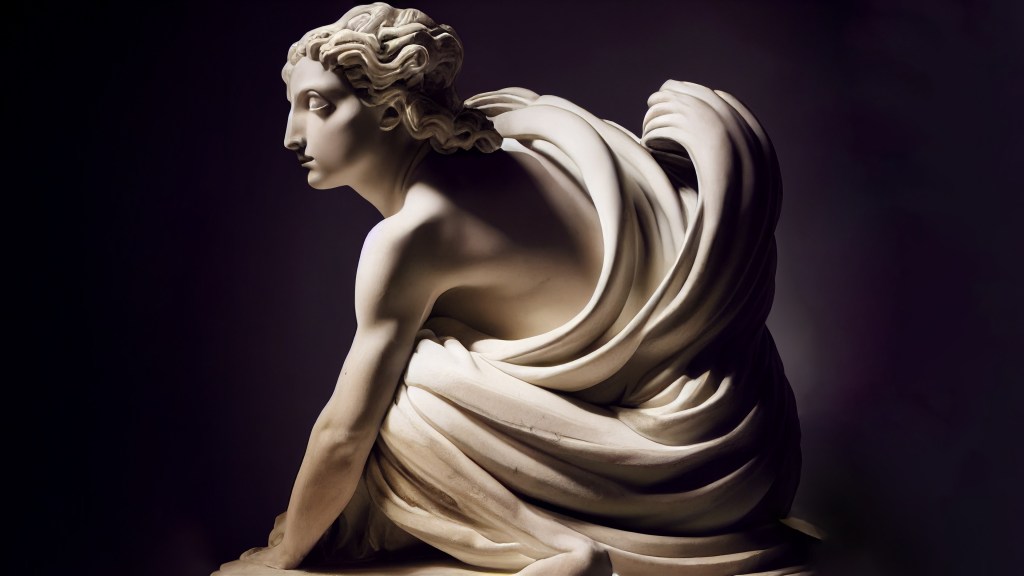
Renaissance marble statue of Gaia. (Yueh Chiang, Shutterstock)
I found myself asking: Why Lynn? Why go out of your way to strangle in the cradle the entirely predictable and charming popular culture notion that Mother Nature is real because this brilliant science lady has now proven it? Why not cut us some slack? Why such concrete thinking? Why the triumphal glee of being the bearer of “frightening news from science?” And, by the way, doesn’t biological Gaia resonate with mythological Gaia in the sense that we must honor and respect her lest she punish us? We can’t allow even that innocent metaphorical transgression?
Throughout Symbiotic Planet, Margulis laments the coming climate crisis. She asks: How can we turn things around when greedy corporations and unscrupulous politicians are in charge of the messaging? How do we win the hearts and minds of the common people?
It’s frustrating that she couldn’t see the answer that was right in front of her.
How might science soften its stance? I’ll convey a somewhat less frightening suggestion of my own by arguing that the Catholic Church has taken a much more progressive and thoughtful approach to making science-centric questions more accessible to non-scientists.
“An atheist, in order to be an atheist, has to have a really clear idea of who the God is that they don’t believe in. More often than not they are right – the God they don’t believe in I don’t believe in either.” – Fr. Guy Consolmogno
The late Pope Francis framed climate change as a moral challenge. As God’s creation, Catholics had a duty to not only protect and care for the earth, but to care for those most severely affected by environmental disruption. It might surprise a lot of Christians, including my fellow Catholics, to learn that the Vatican accepted evolution as correct science back in the 1960s, and one of the mid-century’s most famous – some might say eccentric – theorists of human biological evolution was Tielhard de Chardin, a Jesuit.
I recently read a New Yorker interview with another Jesuit, Guy Consolmogno, an American who is the director of the Vatican Observatory. In other words, the Pope’s astronomer. (The New Yorker, 8.4.25; p.20-25)
Unlike other Christians, Catholics aren’t required to believe the world was created in seven days, and God’s precise role in evolution is still a matter of, shall we say, imaginative discernment. Thus, Consolmogno sees no conflict between his belief in God as the ultimate creative force in the universe, and contemporary cosmological theories like the Big Bang.
Studying distant galaxies through a telescope lens, Consolmogno sees the handiwork of a being who is ultimately beyond human understanding, but who “loves to act with elegance, economy, predictability, and consistency.” (Ibid. p.24)
In Consolmogno’s view, scientific atheists are rejecting a “straw God” they’ve conceived to bolster their own arguments. “An atheist, in order to be an atheist, has to have a really clear idea of who the God is that they don’t believe in. More often than not they are right – the God they don’t believe in I don’t believe in either.” (Ibid.24)
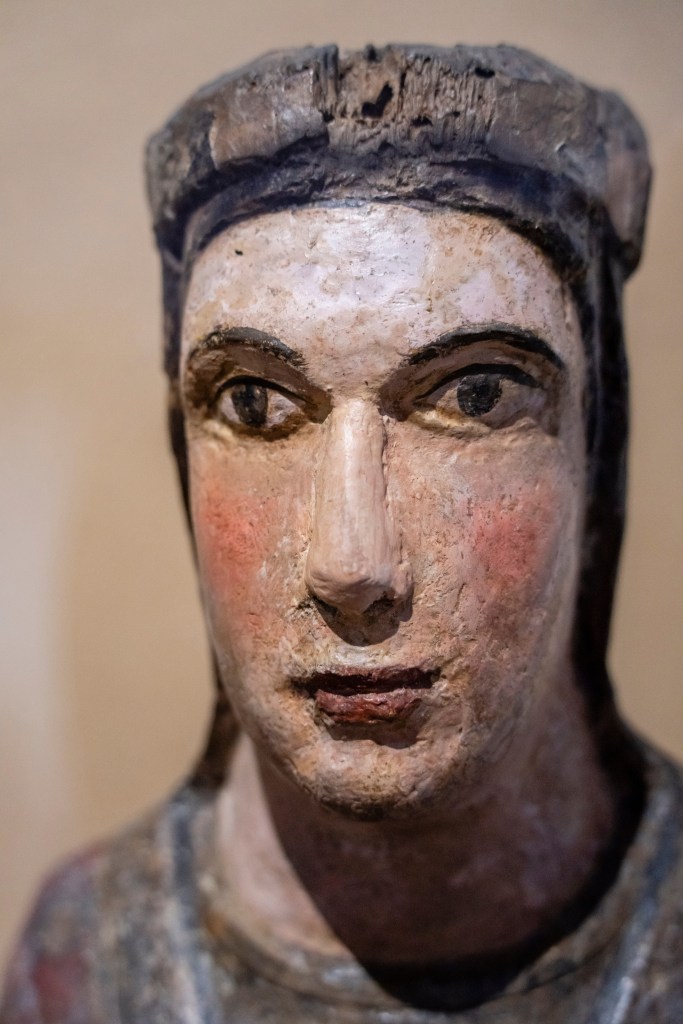
Virgin Mary in polychrome wood, 12th century, Catalan work, Girona art museum, Girona, Catalonia, Spain, (tolobalaguer.com, Shutterstock)
Stating it from a slightly different perspective, as Stanford evolutionary biologist Joan Roughgarden wrote in Evolution and Christian Faith, atheism tends to be a self-affirming misjudgment because “God” is not an idea that’s accessible to scientific reasoning; God is an experience, an ineffable transcendent awareness of being.
Many other scientists who are also practicing Christians and Jews, including Darwin himself, have expressed similarly elegant openness to the compatibility of evolution and theology.
All this brings me to a recent study by the biology faculty at Brigham Young University in which they questioned why some students reject evolutionary theory. As anticipated, the main reason was the conflict with their religious beliefs, particularly students who weren’t biology majors. The investigators then assessed different educational approaches to changing the students’ minds.
… the least effective means of changing hearts and minds was what they called the “deficit thinking” approach in which it is assumed that people reject evolution either because they can’t grasp it intellectually or they simply don’t know enough biology …
They discovered that the least effective means of changing hearts and minds was what they called the “deficit thinking” approach in which it is assumed that people reject evolution either because they can’t grasp it intellectually or they simply don’t know enough biology to connect the dots. This is the approach that most science educators and popularizers take about the general public’s views of evolution.
It turned out that the students had plenty of intellectual capacity to grasp evolutionary concepts and absorb biological science information, but they perceived evolutionary theory as being a kind of zero-sum proposition. Simply put, if you accepted evolution then you must, by necessity, reject religion. Since there’s no room for God in biology, and their faith in a transcendent God was unshakeable, they had no choice but to accept irrefutable biological facts as true while rejecting its all-encompassing and unifying theory.
The most effective approach, the “reconciliatory” approach, was to first describe to the non-science majors how science actually operates, in order to demonstrate that it isn’t the all-knowing, unassailably correct institution is often claims to be. And then to encourage these students, along with biology majors who also had trouble accepting evolution, to participate in open discussions about how evolution might be reconciled with their religious beliefs that took into account varying degrees of students’ religiosity, as well as cultural differences between students and faculty.
The take home message for biologists was to be a little less categorical in their own thinking and, perhaps be a little more respectful and tolerant of theology. Maybe even read a little theology themselves.
A good place to start might be Buddhist scholar and Georgetown University professor Francisca Cho’s Science and Religion in the Mirror of Buddhism (2016, Routledge). She notes that most scientists see themselves as progressively open-minded, particularly about other cultures and ways of thinking, until they encounter a way of thinking that challenges their scientific authority.
The unsurprising public response to this scientific high-mindedness, says Cho, is the perception that science is hostile to theistic values and, as the BYU researchers learned, ratcheting up efforts to “educate” the public about the undeniable truth of scientific insight often only make things worse. (p.7)
Buddhism tolerates a “plurality of narratives” about the world, says Cho. Whether it’s a scientific narrative or a religious one, its value is judged by the usefulness of its words and whether they cause social harm or good. “Creation myths offer patterns for shaping a stable world of meaning” (p.86) – a shared, contemporary understanding that places the human world in the context of the natural world – and “not attempts to explain the world in a complete and final manner.”(p.88)
As Karen Armstrong writes in Sacred Nature (2023, Penguin Random House), myths are an ancient form of psychology (ch. 1, Myth and Logos). Mythologies are ancient imaginary narratives, but they speak to what is true and enduring in the natural world and the human psyche. The myth of the earth mother, the nurturing, life-giving feminine force of renewal, was one of the first theistic narratives to arise in the Homo religiosus mind and has been one of the most enduring.
The Hindu goddess Saraswati first appeared in the Vedas as the life-giving deity of a river in the ancient Indus valley in what is now northern India. Over the centuries she evolved to become one of the supreme creator goddesses of Hindu culture, connecting the transcendent cosmic world to the human world, in which she is now also revered as the goddess of art, learning, and wisdom.

Statue of Saraswati outside the Indonesian Embassy in Washington D.C. (Chad Silva, Shutterstock)
The Greek goddess Gaia was first conceived as the cosmic mother of the earth, nurturing all of nature and connecting it to the transcendent world behind the physical world. She eventually was revered as the mother of all philosophical poetic thought.
Through Mary, mother of Jesus, God descended into the human world. In the third century she was known as Theotokos, Greek for “god-bearer.” Although Catholic and Orthodox authorities have always opposed popular efforts to depict her as an earth-mother, many Christian theologians see this as an inevitable and irrepressible fusion of Christian and indigenous beliefs. (Center for Action and Contemplation; Mary: An archetype of feminine incarnation)
In some ways, the struggle of Catholic and Orthodox authorities to contain the intuitive tendency to depict Mary as earth-mother is reminiscent of scientific authorities’ efforts to oppose creationist interpretations of evolution. Authorities don’t like having their doctrines and narratives transgressed.
There’s no scientific evidence to support creationism, and as a scientist and passionate advocate of teaching evolutionary theory, I feel strongly that creationism shouldn’t be taught in public schools because, well, science can only teach what science knows.
But where is the harm in tolerating creationist interpretations of evolutionary theory in the public realm? Why the insistence that evolutionary theory must only be understood from a scientific perspective? When I was a graduate student studying biochemistry, I never would have dreamed of writing such a thing, but after years of observing the increasingly dire global political struggle over the environment leading up to the debacle of the Trump administration, I think it’s time for a different approach.

 Biology for the Soul